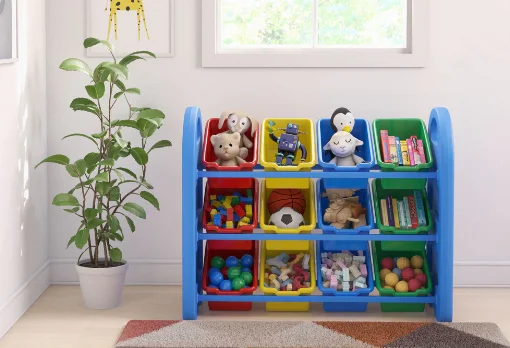
Managing and organizing toys of kids is undoubtedly a daunting task for parents nowadays- especially for busy parents. Cleaning, sorting, and storing toys can take up considerable time, energy, and attention. However, a cluttered and disorganized playroom can lead to several negative outcomes, including safety hazards, diseases, diminishing playtime, creating chaos and anxiety, and increasing stress levels. Therefore, it is crucial to maintain an organized and tidy playroom, which in turn will foster safety, joy, creativity, and learning for kids. In this article, we have compiled some practical and effective toy organization hacks for busy parents that can help them take the pain out of cleaning and maintaining toy clutter.
- Investigate and Assess: Before beginning the organization process, take some time to investigate and assess the toy organizer. Perform a thorough inspection of all the toys and eliminate broken, outgrown, or inadequate toys that are no longer necessary. Set aside the age-appropriate toys that can be given away or donated. Additionally, it is best to dispose of the damaged or unsafe toys, batteries, and plastic wrappings properly. Decluttering and downsizing toys will not only create more space but also make organizing easier and practical.
- Segregate the Toys: Once you have decluttered, segregation of toys can help streamline the organization process. Segregate and sort the continuous collection of toys in categories like action figures, dolls, building blocks, puzzles, board games, learning toys, etc. You can create unique colored bins for each category of toys that kids can quickly identify and be aesthetically pleasing for decoration. Furthermore, it can encourage children to tidy up and return the different toys to their unique baskets.
- Zone of the playroom: Zoning can help parents arrange and allocate spaces for different toys, enhancing aesthetics, and practicality. Parents can divide the playroom into different play areas like a craft corner, reading nook, dollhouse, LEGO station or board game area. It helps to set up a defined place or zone for every activity and toy, which encourages children to abide by the rule, makes packing toys easier and faster, and decreases the probability of toy clutter piling up around places intended for specific activities.
- Group the Similar Toys: It's an efficient chore to group similar toys like the LEGO or art supplies in separate containers. Small standalone boxes work well here also. The same can be done for toys related to a specific show, with all Barbie or Ken dolls in one box out of the playroom sight to lessen the kid's imaginative-wear and tear on them, play-doh and other messy items in a container with lockable lid help keep playthings appealing but contained.
- Accessibility: One trick of the organization trade is to consider convenience. Make sure toys are conveniently available and accessible for children to play themselves and put them back upon a finalization of playtime. Parents can add lower-level shelves or bins that the child can retrieve and return the toys quickly on their placements. Accessibility encourages kids to perform an impeccable deed before children run towards other tasks dwelling elsewhere, leading fewer amounts of toy wrecks.
- Storage: One of the simplest things that would relieve your child from being tainted by cleaning and storage of toys is to use creative toy organizers. This could be a cube with a shelf that encourages kids to stack chest high the game after play, robot-shaped containers to allocate small figurines for designated flavors of imaginative play or blue mats to conveniently release those that belong to the big collection. Parenting can get chaotic every couple of times, not knowing entirely where toys are. Thus, when separate toys have unique storage apart from different groups in a particular pattern transpiring identification towards ways of rereading locations, life becomes easier.
- Signage: Organizing can often involve parental aids to abstain from instances when kid's too crucial energy. The stuff kids shouldn't touch and ponder are hung up out of reach, with things they would touch easily labeled in their playroom regions. This scheme type of necessity initiates children to comprehend easily where everything belongs without prompting parents.
- Minimalism: A conscious parent's point of thought will expand the child's possibilities of adventure and imaginative play with limited toys. Toys which magnificently express their fashion on displays lead them to be happy about distinguishing their likeness towards friends is perfectly normal for every child. But minimalism cannot be ignored where it builds constructive creativity and leisure activity of imagination towards limitless freedom of play with first-hand capital expenditure into bright minds at a younger age.
评论
发表评论