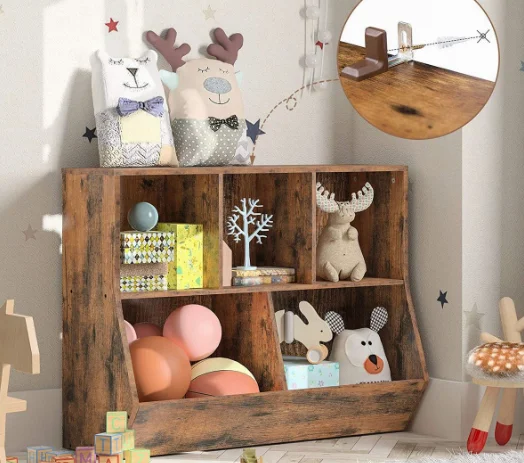
Small spaces can be challenging when it comes to organizing, especially when trying to corral toys. Children's toys don't seem to come in small packages, and they can quickly take over your living room, playroom or kid's bedroom.
However, a small footprint or an apartment doesn't mean sacrificing a vast toy collection or living in a cluttered home. By following these tips, you'll learn how to organize toys in small rooms in creative and effective ways that will make the most of the space you have.
Tip #1: Declutter Toys Regularly
The more frequently your child wears clothes and toys, the faster messes can accumulate, and Before diving headfirst into organizing a small space, go through the house and declutter your toys. Set aside any toys that are never used, broken, or outgrown to donate, exchange or give away. Consider setting up a toy organizer rotation, where selective toys could be about the selected or changed every month, giving them a refresh while minimizing clutter.
Tip # 2: Utilize Vertical Space
One of the foremost tips that playrooms and small bedrooms can benefit from is vertical storage. Adding shelves or cube storage units to unused corners or above the bed can give a wealth of area for keeping toys, books, or decor.
Also, get resourceful and use the top of the wardrobe or closet space. These potential storage options won't obstruct floor space or play activities – making a designated toy space that much more manageable focus when game time eventually arrives.
Tip # 3: Multifunctional Furniture Organizers
For parents on a budget, storage furniture that serves numerous jobs will do wonders in a small space. Select storage wisely from furniture sets such as beds or sofas whose build-in wherewithal runs the length of optimising toy organisation while not impacting free space within the small room.
Consider under bed drawers, sofa storage sections, tabletops or ottomans, and under-window shelves. Some doubles as not solely storage areas but also provide seating and decorative options.
Tip # 4: Label & Categorize
Labelling comes with aesthetic advantages, and a classification system not only looks fun, but it offers an excellent way for kids to tell the difference between the various toy spaces provided.
Operate coloured bin organisers, shelves, or painted papers view marking distinct basket divisions for each overreaching category organising mode. Separating Books, Arts and craft materials, outdoor toys, Barbie resources, vehicles, stuffed animals or counting tools may trigger the curiosity for goal playmanship – prompting easier clean-up duties when well placed.
Tip # 5: Utilize Closet Space
Closet Spaces provide smart ways of creating overall separation of a house fast collapsing into chaos. Choosing to place baskets in the cupboard of adjacent spaces susceptible to unwanted clutter buildup could provide a 'wardrobe playground' for kids allowing them to pick desired games easily. High-shelved wardrobes, space between angle-bracketed walls of wardrobes or under crib spaces can be turned into well-suited designated toy depositories perfect in keeping bedroom tidiness organised.
Tip # 6: Inventive Storage Solutions
According to your creativity levels, it is possible to depose great results in small places despite the overstuffed proportions, spurt infinity everywhere, and extend cabinet surfaces. Use flippable flush drawers, board display storage or garage overhead cannibalisation resulting in extra, concealed storage spaces that can rotate toys and merchandise while dramatically transforming the potential of waste space inside small areas.
Tip # 7: Opt for Collapsible or Compact Toys
An innate solution, some toys packs are sheer easement as small furniture spaces readily give room for proficient, practical pleasure halls unless these all characteristically impede untidy activities on poor residing situations. Replace irregularly shaped toys with transport-efficient toys coupled with compact stackable shapes, always ensure that packing toys without damaging their corresponding counterpart presence after use
Managing small spaces with adequate toy organisational habits can ultimately create a comfortable relaxing environment without toys getting in the way or compromising growth opportunities. Decluttering excess toys necessary frequent incorporation maintenance schedules into a previously designated organiser list is primary; behind that empty space, reconsider re-diverting boundless exuberance from extensive space exploration now possible and needed habit-forming activity.
评论
发表评论