If you are considering getting a turtle as a pet, it is important to provide them with a comfortable and safe living environment. A turtle tank is a great way to create a habitat for your turtle, but setting up a tank can be challenging for beginners. In this article, we will provide a step-by-step guide to setting up a turtle tank.
Choose the Right Size Tank
The first step in setting up a turtle tank is to choose the right size tank. Turtles require a lot of space to swim and move around, so it is important to provide a tank that is large enough for your turtle to live comfortably. The general rule of thumb is that the tank should be at least four times longer than the turtle's shell length and twice as wide as the turtle's shell length.
Select a Good Location
The location of the tank is also important. It should be placed in a spot that is away from direct sunlight, drafts, and other sources of heat. You should also make sure that the tank is placed on a sturdy surface that can support the weight of the tank and any accessories.
Install a Filtration System
A good filtration system is essential for keeping the tank clean and maintaining good water quality. There are three types of filtration systems that you can choose from: mechanical, biological, and chemical. A combination of these three systems is the most effective way to keep the water in the tank clean.
Add Substrate
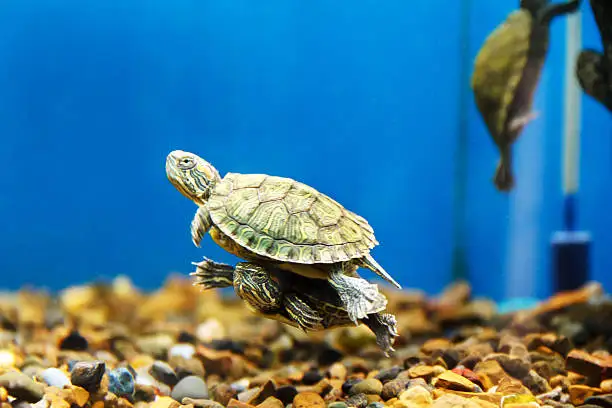
Substrate is the material that lines the bottom of the tank. It is important to choose a substrate that is safe for your turtle and easy to clean. Some good options include aquarium gravel, sand, and river rocks. The substrate should be about an inch deep to allow your turtle to dig and burrow if they want to.
Provide a Basking Spot
Turtles need a basking spot where they can climb out of the water and dry off. You can provide a basking spot by using a floating platform or a pile of rocks. The basking spot should be located under the heat lamp and UVB light, which we will discuss next.
Install a Heat Lamp and UVB Light
Turtles require heat and UVB light to maintain their health. A heat lamp should be installed over the basking spot to provide warmth, and a UVB light should be installed to provide ultraviolet light, which helps turtles synthesize vitamin D3. The heat lamp and UVB light should be on for 10-12 hours a day.
Provide Hideaways and Décor
Turtles need places to hide and explore in their tank. You can provide hideaways by using rocks, logs, and plants. It is important to choose décor that is safe for your turtle and easy to clean. Avoid using plastic plants and decorations, as they can be harmful to your turtle.
Fill the Tank with Water
Once you have set up the filtration system, substrate, basking spot, heat lamp, UVB light, hideaways, and décor, it is time to fill the tank with water. The water level should be at least as deep as the turtle's shell length, but it can be deeper if your turtle is a good swimmer.
Add Plants and Accessories
Adding live or artificial plants and accessories to the tank can make it look more natural and provide additional hiding spots for your turtle. Plants can also help oxygenate the water and provide a source of food for your turtle.
Monitor Water Quality
Finally, it is important to monitor the water quality in the tank regularly. Test the water for ammonia, nitrite, nitrate, and pH levels, and make adjustments as needed. You should also perform regular water changes to keep the water clean and clear.
Setting up a turtle tank can be a fun and rewarding experience, but it requires careful planning and attention to detail. By following the steps outlined in this beginner's guide, you can create a safe and comfortable habitat for your turtle. Remember to provide a large enough tank, a good filtration system, a basking spot, heat lamp, UVB light, hideaways, and décor, and monitor the water quality regularly. With proper care, your turtle can live a healthy and happy life in their new home.
评论
发表评论